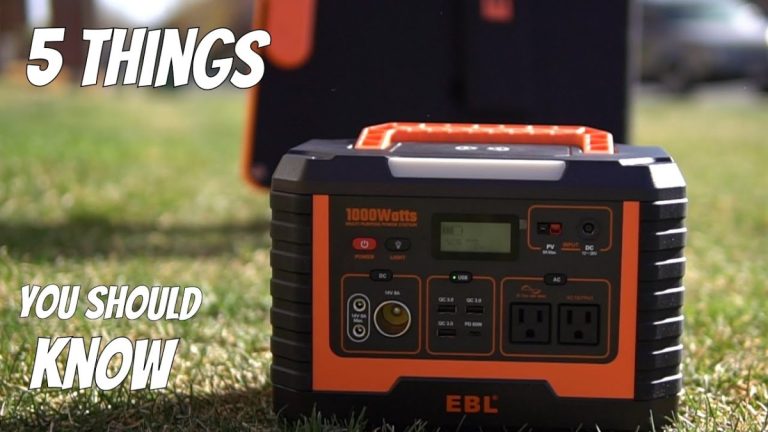
What Are the Best Portable Power Solutions for RVs?

Are you tired of struggling to find reliable power sources for your RV adventures?
Wondering what are the Best Portable Power Solutions for RVs?
Look no further! In this article, we explore the best portable power solutions specifically designed for RVs.
Whether you’re going off the grid or simply looking for a backup power source, we’ve got you covered.
From solar panels to generators, we’ll discuss the pros and cons of each option, helping you make an informed decision.
Say goodbye to power woes and hello to hassle-free RV journeys with these top-notch portable power solutions.
[embedyt] https://www.youtube.com/watch?v=yF5oELzOKpY[/embedyt]Benefits of portable power solutions for RVs
Convenience
Portable power solutions offer a great deal of convenience for RV owners.
Whether you’re camping, traveling, or simply enjoying the outdoors, having a reliable source of power can make your experience much more enjoyable.
With a portable power solution, you can power your RV appliances, charge your devices, and run other electrical equipment without the need for a traditional power source.
Energy independence
One of the major advantages of using portable power solutions for your RV is the ability to achieve energy independence.
Instead of relying on campground hookups or limited generator usage, you can rely on your own power source.
This allows you to camp in remote locations or boondock for longer periods of time without worrying about running out of power.
Cost savings
Investing in portable power solutions can actually save you money in the long run.
Instead of relying solely on campground hookups or running a generator, which can be costly in terms of fuel or campground fees, portable power solutions offer a more affordable option.
Once you have the initial set-up, you can recharge your batteries using solar power, which is free and renewable.
Environmental friendliness
In today’s world, environmental sustainability should be a top priority.
Portable power solutions, especially those that utilize solar energy, are a much more environmentally friendly option compared to traditional power sources.
Solar power is a clean, renewable energy source that helps reduce greenhouse gas emissions and minimize your carbon footprint while still providing you with all the power you need for your RV.


Factors to consider when choosing portable power solutions for RVs
Power requirements
Before choosing a portable power solution for your RV, it’s important to assess your power requirements.
Consider the appliances and devices you’ll be using and their power consumption.
This will help determine the size and capacity of the system you need.
Battery capacity
The battery capacity is an essential factor when it comes to portable power solutions.
It determines how long you can run your RV appliances without recharging.
Consider your energy needs and choose a battery with sufficient capacity to meet those demands.
Portability and weight
Since you’ll be using the power solution in your RV, portability and weight are important considerations.
You’ll want a system that is lightweight and easy to transport, especially if you plan on moving the system in and out of your RV frequently.
Charging options
Different portable power solutions offer various charging options.
Solar power systems rely on sunlight to recharge batteries, while generators may require fuel.
Consider the availability of charging options that suit your camping style and preferences.
Expandability
It’s always a good idea to choose a portable power solution that is expandable.
As your power needs grow, you’ll want the ability to add additional batteries or panels to your system.
This flexibility ensures that your power solution can adapt to your changing needs.
Durability and weather resistance
Since your RV will be exposed to outdoor elements, it’s important to consider the durability and weather resistance of the portable power solution.
Ensure that the system is built to withstand harsh weather conditions and is durable enough to withstand the vibrations and movements associated with RV travel.
Safety features
Safety should always be a priority, so make sure the portable power solution you choose has safety features such as overload protection, short-circuit protection, and overcharge protection.
These features help protect your RV’s appliances and devices from damage and ensure the safety of your RV and its occupants.
Ease of use
Look for a portable power solution that is user-friendly and easy to operate.
This includes features such as clear and intuitive interfaces, easy installation processes, and simple maintenance requirements.
Budget
Budget is always a consideration when purchasing any product, and portable power solutions for RVs are no exception.
Determine your budget and find a system that fits within your financial limits while still meeting your power requirements.
Solar power systems
Advantages of solar power for RVs
Solar power offers several advantages for RV owners.
Firstly, it is a clean and renewable energy source, which aligns with environmental sustainability goals.
Secondly, solar power allows for energy independence, as long as you have sufficient sunlight to recharge your batteries.
Additionally, solar panels are silent and require minimal maintenance, making them a hassle-free option for RVers.
Solar panels
Solar panels are the heart of a solar power system.
They convert sunlight into electricity, which is then stored in batteries. When choosing solar panels for your RV, consider the wattage, size, and efficiency.
Monocrystalline panels are known for their high efficiency and performance in low-light conditions, while polycrystalline panels offer a more cost-effective option.
Solar charge controllers
Solar charge controllers are essential components of a solar power system.
They regulate the amount of electricity flowing to the batteries, preventing overcharging and extending battery life.
Look for charge controllers with features like multiple charging modes and LCD displays for easy monitoring.
Batteries
Batteries are crucial for storing the energy generated by your solar panels.
There are several types of batteries suitable for RV use, including lead-acid batteries, AGM batteries, and lithium-ion batteries.
Consider factors such as capacity, voltage, lifespan, and cycling ability when choosing the right battery for your needs.
Inverters
An inverter is necessary to convert DC power from the batteries into AC power for running household appliances and electronics.
When selecting an inverter, consider its maximum power output, surge capacity, and waveform type.
Pure sine wave inverters are recommended for sensitive electronics, while modified sine wave inverters are more affordable but may not be suitable for certain devices.

Portable solar power kits
For those who want a convenient all-in-one solution, portable solar power kits are a great option.
These kits typically include solar panels, charge controllers, batteries, inverters, and cables, all packaged in a compact and easy-to-transport system.
Portable solar power kits provide a plug-and-play solution for powering your RV.
Installation and maintenance
Solar power systems can be installed on the roof of your RV or as portable units.
Roof-mounted installations are more permanent and provide a convenient way to charge your batteries while driving or parked.
Portable solar panels, on the other hand, offer flexibility as you can position them to capture the most sunlight.
Regardless of the installation method, regular maintenance such as cleaning the panels and checking connections is necessary to ensure optimal performance.
Generator options
Types of RV generators
RV generators come in various types, each with its own advantages and considerations.
The main types include gasoline generators, diesel generators, propane generators, and inverter generators.
Understanding the differences between these types will help you make an informed decision based on your RV’s specific needs.
Gasoline generators
Gasoline generators are common and widely available.
They are generally affordable and offer decent power output.
However, gasoline generators tend to be louder, have lower fuel efficiency, and can produce more emissions compared to other generator types.
Diesel generators
Diesel generators are known for their fuel efficiency and durability.
They typically provide more power output compared to gasoline generators.
While they are generally more expensive upfront, diesel generators can be more cost-effective in the long run due to their better fuel efficiency.
Propane generators
Propane generators are a popular choice for RV owners.
Propane is readily available and relatively affordable.
Propane generators are also quieter and produce cleaner emissions compared to gasoline generators. However, propane generators may have lower power output compared to gasoline or diesel generators.
Inverter generators
Inverter generators are known for their quiet operation and clean power output.
They are designed to produce stable and reliable electricity that is safe for sensitive electronics. Inverter generators are typically more expensive, but they offer fuel efficiency and extended run times, making them ideal for RVers who value quiet and efficient power.
Size and power output considerations
When choosing a generator, consider the size and power output that your RV requires.
Larger RVs with multiple appliances and high power demands will need generators with higher wattage capacities.
It’s important to assess your power needs accurately to avoid overloading or underpowering your generator.
Noise levels
Generators can be noisy, and excessive noise can disrupt your camping experience and bother neighboring campers.
If noise levels are a concern, consider generators with noise reduction features or opt for quieter options such as inverter generators.
Fuel efficiency
Fuel efficiency is an important consideration, especially if you plan on using your generator frequently or for extended periods.
Look for generators that offer fuel-efficient operation, as this can save you money on fuel costs and reduce environmental impact.
Maintenance
Regular maintenance is necessary to ensure your generator operates smoothly and reliably.
Follow the manufacturer’s recommendations for maintenance tasks such as oil changes, air filter cleaning/replacement, and spark plug inspections.
Proper maintenance will help extend the life of your generator and prevent unexpected breakdowns.
Battery technology
Types of RV batteries
Portable power solutions for RVs play a crucial role in providing power when you’re not connected to a traditional power source.
There are three main types of batteries used in RVs: lead-acid batteries, AGM batteries, and lithium-ion batteries.
Each type has its own advantages and considerations.
Lead-acid batteries
Lead-acid batteries are the most common type of RV batteries because they are affordable and reliable.
They come in two varieties: flooded lead-acid batteries and sealed lead-acid batteries.
Flooded batteries require regular maintenance, including checking water levels and adding distilled water as needed.
Sealed batteries, also known as maintenance-free batteries, do not require water maintenance but may have a shorter lifespan.
AGM batteries
AGM (Absorbent Glass Mat) batteries are a popular choice for RV owners due to their maintenance-free design and ability to handle deep discharges.
They are sealed and do not require periodic water maintenance.
AGM batteries are highly efficient and can withstand vibrations and shocks associated with RV travel.
Lithium-ion batteries
Lithium-ion batteries offer several advantages over traditional lead-acid batteries.
They provide a higher energy density, allowing for a longer runtime and better performance.
Lithium-ion batteries also have a longer lifespan and can withstand a larger number of charge and discharge cycles.
However, they tend to be more expensive upfront.
Battery capacity and voltage
The capacity and voltage of your RV battery are important factors to consider.
Battery capacity is measured in ampere-hours (Ah) and determines how long the battery can provide power before needing a recharge.
Voltage refers to the electrical potential difference between the positive and negative terminals.
Common voltages for RV batteries are 12V and 6V, with multiple batteries often connected in a series or parallel configuration to achieve the desired capacity.
Battery lifespan and cycling ability
The lifespan of the battery and its ability to handle charge and discharge cycles are crucial considerations.
Lead-acid batteries typically have a lifespan of 3-5 years, while AGM batteries can last up to 8 years.
Lithium-ion batteries have the longest lifespan, often exceeding 10 years.
Additionally, consider the number of cycles a battery can handle, as this impacts its overall longevity.
Charging and discharging rates
Different battery technologies have varying charging and discharging rates.
Some batteries can handle rapid charging and discharging, which is useful if you have high power demands or need quick recharging.
Consider the charging capabilities of your battery and ensure that your charging system is compatible.
Maintenance requirements
Maintenance requirements differ between battery types. Lead-acid batteries, particularly flooded batteries, require regular checks of water levels and occasional maintenance.
AGM and lithium-ion batteries generally have minimal maintenance needs, making them more convenient options for RV owners.
Fuel cell systems
How fuel cell systems work
Fuel cell systems generate electricity by converting the energy from a chemical reaction.
They use hydrogen or methanol as fuel, which is combined with oxygen from the air to produce electricity, water, and heat. Fuel cell systems are highly efficient and produce clean energy without emissions.
Advantages of fuel cells for RVs
Fuel cells offer several advantages for RV owners.
Firstly, they provide a reliable source of power with long runtimes.
Fuel cells can continuously generate power as long as there is fuel available.
Secondly, fuel cells operate silently and produce no harmful emissions, making them an eco-friendly option for RVers. Finally, fuel cells are compact and lightweight, making them ideal for RVs with limited space.
Types of fuel cells
There are different types of fuel cells suited for various applications.
For RVs, the most common types are hydrogen fuel cells and methanol fuel cells.
Hydrogen fuel cells require a dedicated hydrogen storage system, while methanol fuel cells use liquid methanol as fuel.
Hydrogen fuel cell systems
Hydrogen fuel cell systems utilize hydrogen gas to produce electricity.
The hydrogen can be stored in high-pressure tanks or using solid-state storage methods.
Hydrogen fuel cells offer high power output and long runtimes, but the availability and infrastructure for hydrogen refueling can be limited in certain areas.
Methanol fuel cell systems
Methanol fuel cell systems use liquid methanol as fuel.
Methanol is easier to handle and transport compared to hydrogen, which makes methanol fuel cells more practical for RV applications.
Methanol fuel cells provide reliable power and can be refueled with methanol cartridges.
However, the availability of methanol fuel may vary depending on your location.
Fuel cell efficiency and power output
Fuel cells are known for their high efficiency and consistent power output.
Fuel cell systems can operate at efficiencies of over 50% or even up to 70%, which is significantly higher than traditional power generation methods.
The power output of fuel cells is typically measured in kilowatts (kW), and RV fuel cell systems vary in size and power output.
Fuel availability and safety considerations
When considering a fuel cell system for your RV, it’s important to consider the availability of the required fuel, whether it’s hydrogen or methanol.
Additionally, proper handling and storage of fuel are essential for safety.
Ensure that you comply with local regulations and follow the manufacturer’s recommendations for fuel storage and refueling procedures.
Combination power solutions
Hybrid systems
Hybrid power systems combine multiple energy sources for greater efficiency and reliability.
In the context of RVs, hybrid systems can combine solar power, generators, batteries, and fuel cells to offer a comprehensive power solution.
This allows for a more flexible and robust power supply that can meet varying energy demands and provide redundancy if one energy source fails.
Solar and generator combinations
Combining solar power and generators can provide the best of both worlds.
Solar power can recharge batteries during the day when the sun is available, while generators can be used as a backup or for high-demand situations.
This combination ensures a continuous power supply even on cloudy days or during peak usage.
Solar and battery combinations
Solar power combined with batteries offers a reliable and sustainable power solution.
Solar panels generate electricity during the day and charge the batteries, which can then be used to power your RV appliances during the day or night.
This combination provides energy independence and reduces the reliance on traditional power sources.
Generator and battery combinations
Combining a generator and batteries can offer a versatile and flexible power solution.
The generator can be used to recharge the batteries when solar power is limited or unavailable.
This combination ensures a continuous power supply and extends the runtime of your battery bank.
Pros and cons of combination power solutions
Combination power solutions offer versatility and reliability, but they also come with their own considerations.
On the positive side, combining multiple energy sources provides redundancy and flexibility.
However, it may also increase the complexity of the system and requires careful planning and integration to ensure optimal performance.
Accessories and add-ons
Battery monitors
Battery monitors are essential for keeping track of your battery’s state of charge, voltage, and other important metrics.
They provide valuable information that helps you manage your power usage, prevent overcharging or discharging, and prolong battery life.
Power inverters
Power inverters convert DC power from your batteries into AC power, allowing you to power household appliances and electronics in your RV.
Inverters come in various sizes and power capabilities, so choose one that matches your power needs.
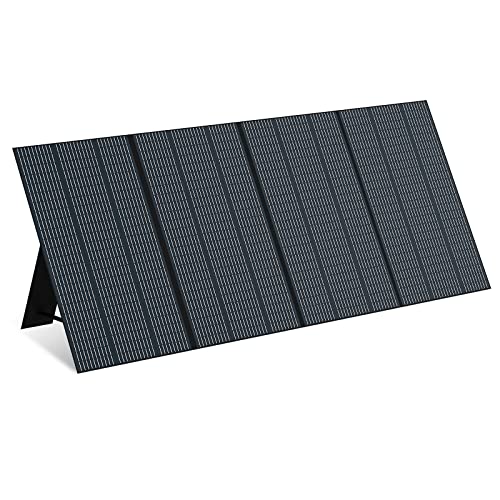
Portable solar panels
Portable solar panels are a convenient addition to your RV power system.
They can be easily transported and positioned to capture the maximum amount of sunlight.
Portable solar panels provide additional charging capability and are ideal for RVers who want to take advantage of the sun’s energy while on the move.

Battery chargers
Battery chargers are useful for recharging your batteries when external power sources, such as campground hookups or generators, are available.
They offer a fast and efficient way to recharge your batteries and can be an essential accessory for RVers who frequently rely on external power.
Solar panel tilt mounts
Tilt mounts for solar panels allow you to adjust the angle of your solar panels to maximize sunlight exposure.
This is particularly useful during winter or in areas with less sunlight.
Tilt mounts help optimize the performance of your solar power system.
RV shore power connections
RV shore power connections allow you to connect your RV to traditional power sources at campgrounds or RV parks.
These connections provide a convenient and reliable way to power your RV appliances and recharge your batteries when available.
Cables and connectors
Cables and connectors are necessary for connecting your power system components.
Ensure that you have the appropriate cables and connectors that are compatible with your system to ensure proper and safe operation.
Power management systems
Power management systems help optimize your RV’s power usage and prevent electrical issues.
These systems monitor and control the power distribution within your RV, preventing overload situations and ensuring a balanced and efficient power supply.
Installation and maintenance tips
Professional installation vs. DIY
When it comes to installing your portable power solution, you have the option to do it yourself or hire a professional.
DIY installation can save money, but it requires a good understanding of electrical systems and RV specifications.
If you’re unsure or don’t feel comfortable, it’s best to seek professional help to ensure your system is installed correctly and safely.
Proper wiring and grounding
Proper wiring and grounding are critical for the safe and efficient operation of your portable power solution.
Follow the manufacturer’s instructions and adhere to local electrical codes.
Use appropriate wire sizes and quality connectors to minimize voltage loss and ensure proper connections.
Routine maintenance
Regular maintenance is essential to keep your portable power solution in good working order.
Follow the manufacturer’s guidelines for maintenance tasks such as cleaning solar panels, inspecting connections, checking battery voltages, and replacing filters or components as needed.
Safety precautions
Electrical systems can be hazardous if not handled properly.
Always take safety precautions when working with your portable power solution.
Disconnect power sources and wear appropriate safety gear such as gloves and safety glasses.
Avoid working on electrical systems in wet or damp conditions.
Troubleshooting common issues
Even with proper installation and maintenance, issues may arise with your portable power solution.
Familiarize yourself with common issues and their troubleshooting steps.
Keep a toolkit with the necessary tools and spare parts to address common problems while on the road.
Conclusion
Having a reliable and efficient portable power solution is essential for RV owners.
Whether you choose solar power, generators, fuel cell systems, or combination solutions, there are numerous benefits to be enjoyed.
Portable power solutions offer convenience, energy independence, cost savings, and environmental friendliness.
Consider factors such as power requirements, battery capacity, portability, charging options, expandability, durability, safety features, ease of use, and budget when choosing the right solution for your RV.
Remember to prioritize proper installation, routine maintenance, and safety precautions to ensure optimal performance and a hassle-free experience during your RV adventures.