What Are The Key Features To Look For In A Portable Power Station?

Portable power stations have become increasingly popular in recent years, providing a convenient and reliable source of power for various outdoor activities or emergency situations.
But with so many options on the market, it can be overwhelming to choose the right one for your needs.
This article will highlight the key features to look for when selecting a portable power station, ensuring that you make an informed decision and find the perfect companion for all your power needs on the go.
From battery capacity and charging options to portability and versatility, we’ll cover everything you need to know to make the best choice.
So, whether you’re planning a camping trip or preparing for a power outage, read on to discover the essential features that will make your portable power station a reliable and convenient solution.
[embedyt] https://www.youtube.com/watch?v=F7rhZ30G-38[/embedyt]Battery Capacity
mAh or Wh?
When choosing a portable power station, one of the most important features to consider is the battery capacity.
The battery capacity determines the amount of energy the power station can store and supply to your devices.
There are two common ways to measure battery capacity: milliampere-hour (mAh) and watt-hour (Wh).
mAh is a unit of electric charge, which measures the amount of electricity that can be stored in a battery.
It represents how long a battery can deliver a certain amount of current.
On the other hand, Wh is a unit of energy, which takes into account both the battery’s capacity and voltage.
It represents the total amount of energy the battery can store and deliver.
When comparing portable power stations, it is essential to consider both mAh and Wh to get a complete understanding of their battery capacity.
Some power stations may have a high mAh rating but a lower Wh rating, indicating a lower energy capacity despite having a larger charge.
Ideally, you should look for a portable power station that offers a high mAh and Wh rating, ensuring that it can meet your power needs for an extended period without needing frequent recharging.
Long-lasting power
When you’re on the go, having a portable power station with long-lasting power is crucial.
You want a power station that can provide sufficient energy to keep your devices running for as long as possible.
To determine if a portable power station offers long-lasting power, consider its battery capacity and power output.
A higher battery capacity means more energy can be stored, allowing for longer use without recharging.
Additionally, look for a power station with a higher wattage limit, as it can handle more demanding devices and provide extended power supply.
If you’re planning for long trips or outdoor adventures, selecting a portable power station with long-lasting power is especially important.
You don’t want to run out of power in the middle of nowhere, hindering your ability to communicate or use essential devices.
Recharge time
While a portable power station can provide reliable power on the go, it is essential to consider how long it takes to recharge the battery.
The recharge time will determine how quickly you can get your power station ready for your next adventure.
Different power stations have varying recharge times, depending on the battery capacity and the charging method available.
The most common recharge options include solar charging, car charging, and AC wall charging.
Solar charging is a great option for outdoor enthusiasts as it allows you to harness the power of the sun to recharge your power station’s battery.
However, keep in mind that solar charging usually takes longer than other methods, especially in cloudy or shaded areas.
Car charging is convenient when you’re on a road trip or camping with access to a vehicle.
It is generally faster than solar charging but may still take a few hours depending on the power station’s battery capacity.
AC wall charging is the quickest method to recharge a power station, usually taking a few hours to fully charge the battery.
It is ideal when you have access to electricity, such as at home or in a hotel room.
Consider your charging needs and the available options when choosing a portable power station.
If you require quick recharge times, prioritize power stations with AC wall charging capabilities.
However, if you value renewable energy sources and aren’t in a rush, a power station with solar charging might be the best fit for you.
Compatibility with devices
When selecting a portable power station, it is crucial to consider its compatibility with the devices you plan to use.
Not all power stations are suitable for every type of device, so it’s important to ensure compatibility to avoid any issues or limitations.
Different power stations offer various charging options, including AC outlets, DC outlets, and USB ports.
AC outlets are typically used to power larger devices like laptops, appliances, or tools.
DC outlets are often used for devices that can connect directly to the power station’s battery, such as car fridges or air compressors.
USB ports are ideal for charging smartphones, tablets, cameras, and other small electronic devices.
Check the specifications of the power station to determine the number and type of outlets and ports it offers.
Consider the devices you plan to use during your outdoor activities or in emergency situations and ensure the power station can provide the necessary power and compatibility.
Power Output
AC outlets
AC outlets are crucial when it comes to powering larger devices that require an alternating current source.
These outlets allow you to connect your power station directly to devices such as laptops, TVs, or small home appliances.
When considering the power output of a power station’s AC outlets, it’s essential to look at the wattage limit.
The wattage limit indicates the maximum power output the AC outlets can handle.
Make sure to check the wattage requirements of the devices you plan to use and choose a power station that can handle their power needs.
DC outlets
DC outlets are commonly used for devices that can connect directly to a power station’s battery, bypassing the need for an inverter.
Devices such as car fridges, air compressors, or other 12V devices can be conveniently powered through the DC outlets.
Just like with AC outlets, it is crucial to check the wattage limit of the DC outlets to ensure compatibility with the devices you plan to use.
Higher wattage limits will allow you to power more demanding devices, providing greater versatility and convenience.
USB ports
USB ports are essential for charging small electronic devices such as smartphones, tablets, cameras, or portable speakers.
They offer a convenient and universal charging method, allowing you to connect your devices directly to the power station without the need for additional adapters or cables.
Consider the number and output of the USB ports when choosing a power station.
Some power stations provide more than one USB port, allowing you to charge multiple devices simultaneously.
Additionally, look for USB ports with higher output, such as 2.4A or higher, as they can provide faster charging for your devices.
Wattage limit
The wattage limit of a power station determines its overall power output capacity.
It indicates the maximum amount of power the power station can supply at any given time.
It’s crucial to consider the wattage limit when choosing a portable power station, as it determines the types and number of devices it can power simultaneously.
Make sure to assess your power needs and the wattage requirements of the devices you plan to use.
You should choose a power station that has a wattage limit higher than the total wattage of the devices you want to connect.
This ensures that your power station can handle the load and won’t overload or shut down when powering multiple devices.


Portability
Size and weight
When it comes to portable power stations, one of the significant factors influencing their portability is their size and weight.
The ideal portable power station should strike a balance between providing sufficient power capacity and being compact and lightweight enough for easy transportation.
Consider the spaces where you plan to use the power station and how you intend to transport it.
If you’re using it during outdoor activities like camping or hiking, you’ll want a power station that fits comfortably in your backpack or can be easily carried by hand.
On the other hand, if you’re using it for home backup power or in a vehicle, you may have more flexibility in terms of size and weight.
Pay attention to the dimensions and weight of the power station when making your decision.
Keep in mind that larger battery capacities usually result in larger and heavier power stations.
It’s essential to find the right balance that meets your power needs while still being easy to carry and transport.
Built-in handles or wheels
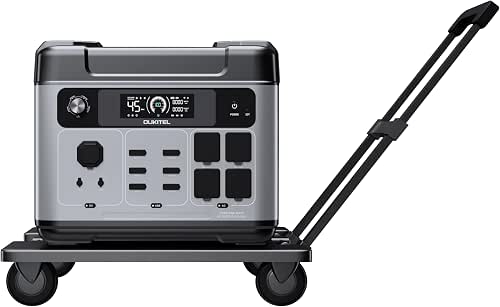
Another aspect of portability is the presence of built-in handles or wheels on the power station.
These features make it easier to move the power station from one location to another, especially if it is large or heavy.
Built-in handles provide a convenient grip to carry the power station by hand, making it easier to transport over short distances or on uneven terrain.
When choosing a power station with built-in handles, make sure they are sturdy and comfortable to hold.
Wheels are particularly useful for larger power stations, as they allow you to roll the power station instead of carrying it.
This is especially beneficial if you need to move the power station over longer distances or flat surfaces.
Look for power stations with durable wheels that can handle various terrains and provide smooth mobility.
Consider your specific needs and the areas where you plan to use the power station.
Built-in handles or wheels can significantly enhance the portability of a power station, making it more convenient and effortless to transport.
Compact design
In addition to size and weight, the overall design of a portable power station also plays a role in its portability.
A compact design ensures that the power station takes up minimal space and can be easily packed or stored when not in use.
When evaluating the compactness of a power station, consider its shape, form factor, and arrangement of outlets and ports.
A power station with a streamlined design, where the outlets and ports are well-organized, is usually more space-efficient and easier to pack.
Some power stations may also come with collapsible or foldable features, further enhancing their compactness when not in use.
These folding designs can save valuable storage space and make the power station more travel-friendly.
Keep in mind that a compact design should not compromise the power station’s functionality or performance.
Ensure that the power station still meets your power requirements while offering a compact and portable solution.
Durability
Construction materials
Durability is a key factor to consider when selecting a portable power station, especially if you plan to use it outdoors or in rugged environments.
You want a power station that can withstand the elements and provide reliable performance over time.
Check the construction materials used in the power station’s construction to assess its durability.
Look for power stations made from high-quality materials such as durable plastics, reinforced metals, or impact-resistant materials.
It is also beneficial to choose a power station that has a solid and sturdy build.
Pay attention to the overall construction and the strength of joints, hinges, and handles.
A well-built power station is less likely to break or sustain damage during rough handling or accidental drops.
Water resistance
If you plan to use your power station in outdoor settings or areas with increased chances of exposure to water, considering its water resistance is crucial.
Water resistance ensures that the power station remains functional and protected even in wet conditions or during light rain.
Check the power station’s water resistance ratings or certifications.
Common ratings include IPX4, which provides protection against splashing water, and IPX5 or higher, which offers protection against water jets or even immersion.
The higher the IPX rating, the more resistant the power station is to water.
Remember that water resistance does not mean the power station is fully waterproof.
It is essential to assess the power station’s water resistance capabilities and use it accordingly to prevent any damage or malfunctions.
Shock resistance
Furthermore, a portable power station should be able to handle shocks and impacts without sustaining significant damage.
This is particularly important if you plan to use the power station in outdoor activities where it may be subject to rough handling or accidental drops.
Look for power stations that are designed to be shock-resistant or have protective features to absorb impacts.
Some power stations may have built-in shock-absorbing materials or ruggedized exteriors to provide additional protection against accidental impacts.
Ensuring that your power station is shock-resistant increases its longevity and reliability, reducing the risk of damage to both the power station and your connected devices.
Safety Features
Short circuit protection
When it comes to portable power stations, safety should always be a top priority.
Short circuit protection is a crucial safety feature that prevents damage to the power station and connected devices in the event of a short circuit.
Short circuits occur when there is an unintended connection between two conductive surfaces, resulting in a surge of current.
This can cause overheating, damage to the power station, or even pose a fire risk.
Power stations equipped with short circuit protection can detect and interrupt the flow of current when a short circuit occurs.
This helps to prevent any potential damage, ensuring the safety of both the power station and your valuable electronic devices.
Overheating protection
Overheating is a common concern when using portable power stations due to their compact design and enclosed battery compartments.
Overheating can lead to reduced performance, damage to the power station, or even fire hazards.
To mitigate the risk of overheating, select a power station that includes overheating protection.
This safety feature monitors the internal temperature of the power station and automatically shuts it down or reduces the power output if it reaches unsafe levels.
Overheating protection is especially important when using power-hungry devices or charging multiple devices simultaneously.
It ensures that the power station remains within a safe temperature range, providing peace of mind while using it in different environments.
Overload protection
Overload protection is another crucial safety feature found in many portable power stations.
It prevents the power station from being damaged or overloaded when connected devices draw more power than the power station can safely provide.
Overloading a power station can lead to overheating, reduced performance, or even permanent damage.
Overload protection helps to prevent these issues by monitoring the power output and automatically shutting down or reducing the flow of current when the limits are exceeded.
By selecting a power station with overload protection, you can use it confidently without worrying about drawing too much power and potentially causing harm to your devices or the power station itself.
Display and Controls
Battery level indicator
Having a battery level indicator on your portable power station is extremely convenient, allowing you to monitor the remaining power easily.
This feature provides you with valuable information about how much power is left, ensuring that you won’t run out unexpectedly.
Battery level indicators can take various forms, such as LED lights, digital displays, or even smartphone apps.
LED lights typically offer a simple representation of the battery level, with each light or color indicating a specific range of remaining power.
Digital displays provide more precise information, showing the exact percentage or estimated runtime remaining.
Some displays may also provide additional information, such as input and output power levels or charging status.
Consider your preferences and how easily accessible and readable the battery level indicator is on the power station.
It’s always beneficial to have a clear indication of the remaining power, especially when you’re relying on the power station in remote locations or during emergencies.
Power output controls
Power output controls allow you to manage and adjust the power flow from your portable power station.
This feature gives you greater control over how much power is delivered to different devices, allowing you to prioritize and optimize energy usage.
Some power stations offer individual power output controls for each outlet or port, while others may have a single control for all outputs.
Having individual controls allows you to customize the power distribution based on the specific needs of your devices.
For example, you can reduce the power output to a less demanding device to ensure other devices receive sufficient power.
Power output controls are particularly useful when you have limited power capacity and need to extend the runtime of your devices.
Being able to manage the power output can help you make the most of your power station, ensuring that the essential devices remain functional for as long as possible.
LCD display
In addition to the battery level indicator, some portable power stations may include an LCD display for enhanced functionality and convenience.
An LCD display can provide additional information about the power station’s performance and settings.
LCD displays can show various details, such as input and output wattage, voltage, battery temperature, charging status, or even a timer.
These additional insights allow you to monitor the power station’s performance more accurately and make informed decisions about power usage or remaining runtime.
Consider whether an LCD display is necessary for your specific needs.
While it provides more detailed information, it may also increase the cost and complexity of the power station.
Evaluate your requirements and preferences to determine if an LCD display is worth the investment for you.
Charging Options
Solar charging
Solar charging is a valuable feature for portable power stations, especially for outdoor and off-grid applications.
It allows you to harness the power of the sun to replenish the power station’s battery, providing a sustainable and renewable energy source.
Power stations with solar charging capabilities come with built-in solar panels or have the option to connect external solar panels.
The solar panels convert sunlight into electricity, which is stored in the power station’s battery.
When considering solar charging, pay attention to the solar panel specifications.
Look for power stations with high-quality solar panels that have a high conversion efficiency.
This ensures that you can efficiently capture solar energy and recharge your power station even in low-light conditions.
It’s important to note that solar charging is typically slower compared to other charging methods.
It depends on weather conditions, the solar panel’s size, efficiency, and the power station’s battery capacity.
However, solar charging provides an environmentally friendly and sustainable way to keep your power station charged, especially in remote or outdoor locations with limited access to electricity.
Car charging
Car charging is a convenient option when you’re on the move or have access to a vehicle.
Most portable power stations can be charged directly from a car’s cigarette lighter socket or through an auxiliary power outlet.
To charge your power station from a car, you’ll need a compatible car charging cable.
These cables are designed to plug into the car’s power outlet and provide a reliable connection to the power station.
Car charging is generally faster than solar charging, allowing you to recharge your power station within a few hours.
It’s a practical option for road trips, camping, or any situation where you have access to a vehicle.
AC wall charging
AC wall charging is the most common and fastest method to recharge a portable power station.
It allows you to connect your power station directly to a standard electrical power outlet using a compatible AC wall charger.
AC wall charging provides the quickest recharge times, usually taking a few hours to fully replenish the power station’s battery.
It is the preferred method when you have access to electricity at home, in a hotel, or any location with AC outlets.
When choosing a power station, ensure that it comes with a compatible AC wall charger.
Some power stations may include multiple charging options, such as a built-in AC wall charger or a removable charger.
Having the flexibility to choose between different charging options can be advantageous in different situations.
Inverter Type
Pure sine wave inverters
The type of inverter used in a portable power station significantly impacts its ability to power various devices.
Pure sine wave inverters are the preferred choice when it comes to powering sensitive electronics or devices with motors.
Pure sine wave inverters produce a clean and smooth electrical output that mimics the quality of the electricity supplied by utility companies or found in traditional electrical grids.
This ensures that your devices receive high-quality power without any potential interference or damage.
Devices that typically require pure sine wave power include laptops, gaming consoles, medical equipment, home appliances, or any device with a digital display.
Using a power station with a pure sine wave inverter provides the best compatibility and ensures that your devices operate smoothly and efficiently.
Modified sine wave inverters
Modified sine wave inverters are an alternative to pure sine wave inverters, providing a more cost-effective solution.
However, they produce a stepped waveform that approximates a pure sine wave, resulting in a less precise electrical output.
While modified sine wave inverters can power many devices, they may not be compatible with certain sensitive electronics or devices with specific power requirements.
Some devices may experience noisy operation, reduced performance, or even malfunction when powered by a modified sine wave inverter.
When evaluating a portable power station’s inverter type, consider the devices you plan to use and their compatibility with modified sine wave inverters.
If you primarily rely on sensitive electronics or devices with specific power requirements, prioritize power stations with pure sine wave inverters to ensure optimal performance and compatibility.
Accessories
Carrying cases
Carrying cases are valuable accessories that provide protection and convenience when transporting or storing your portable power station.
These cases are designed specifically to fit the power station snugly and often include additional compartments to hold cables, adapters, or other accessories.
When choosing a carrying case, look for durable materials that can withstand the rigors of travel or outdoor use.
Consider the type of closure mechanism, such as zippers or buckles, and ensure they are sturdy and secure.
Carrying cases not only protect your power station from scratches and dents but also allow for easy organization and portability.
With a dedicated case, you can safely transport your power station, ensuring it remains in top condition and ready for use whenever you need it.
Solar panel attachments
If your portable power station supports solar charging or has the option to connect external solar panels, consider investing in solar panel attachments.
These attachments allow you to securely mount and position solar panels for optimal charging efficiency.
Solar panel attachments come in various forms, such as brackets, stands, or straps.
They enable you to position the solar panels at the optimal angle to capture maximum sunlight, ensuring efficient charging even in challenging lighting conditions.
When choosing solar panel attachments, ensure compatibility with both your power station and the solar panels you plan to use.
Look for attachments that provide stability, flexibility, and ease of adjustment so you can position the solar panels at the most effective angle.
Solar panel attachments can greatly enhance the functionality and convenience of your power station’s solar charging capabilities, making it easier to harness renewable energy and keep your power station charged even in remote locations.
Cables and adaptors
Having the necessary cables and adaptors on hand is essential to connect your devices to the portable power station.
Ensure that the power station comes with the required cables and connectors, or consider purchasing additional ones if needed.
Common cables and adaptors include AC power cables, DC cables, USB cables, or various device-specific connectors.
Check the specifications of your power station and the devices you plan to use, and ensure compatibility with the provided or additional cables and adaptors.
When selecting cables, look for durable materials and quality construction to ensure reliable connections and optimal charging speeds.
It’s always helpful to have extra cables, especially when charging multiple devices simultaneously or when you need longer cable lengths to reach your desired locations.
Price and Warranty
Cost
When considering a portable power station, it is essential to factor in the cost.
Portable power stations vary significantly in price, depending on their battery capacity, power output, features, and brand.
Establish a budget based on your needs and prioritize the features that are most important to you.
Determine the minimum battery capacity and power output required to meet your power needs and look for power stations within your budget that fulfill those requirements.
While it can be tempting to opt for the cheapest option available, it is crucial to strike a balance between cost and quality.
Cheaper power stations may lack key features, compromise on build quality, or have shorter lifespans.
Investing in a higher-quality power station with the necessary features may be a better long-term solution, avoiding potential issues and ensuring reliable performance.
Length of warranty
The length of warranty provided by the manufacturer is an important consideration when purchasing a portable power station.
A longer warranty period indicates the manufacturer’s confidence in the product’s quality, reliability, and durability.
When assessing the warranty, consider both the length of coverage and what it specifically covers.
Look for warranties that cover manufacturing defects, faults, or malfunctions, ensuring that you have protection in case of any issues with the power station.
Additionally, pay attention to any terms or conditions associated with the warranty.
Some warranties may require specific registration or maintenance procedures to remain valid, so it’s important to understand and follow these requirements.
A longer warranty gives you peace of mind, knowing that the manufacturer stands behind their product.
It provides added assurance that you can rely on the power station for an extended period without worrying about potential defects or failures.
Customer support
Lastly, consider the customer support provided by the manufacturer.
A reputable and reliable manufacturer should offer responsive customer support to address any questions or concerns you may have.
Check the manufacturer’s website or reviews to assess their customer support performance.
Look for availability of contact information, response times, and overall customer satisfaction.
Prompt and helpful customer support can make a significant difference if you encounter any issues or need assistance with your power station.
Consider the manufacturer’s reputation and commitment to customer satisfaction when making your decision.
Choosing a power station from a trusted brand that offers excellent customer support ensures that you have assistance whenever you need it, enhancing your overall experience with the product.
In conclusion, the key features to look for in a portable power station include battery capacity, power output, portability, durability, safety features, display and controls, charging options, inverter type, accessories, price, warranty, and customer support.
By carefully considering these factors and matching them with your specific power needs and preferences, you can select the perfect portable power station that meets your requirements and provides reliable power wherever you go.